What you will learn
Surviving the Peak Colic Weeks
Infant colic (unexplained, persistent crying in healthy babies) usually peaks between 2 and 12 weeks of life. For sleep-deprived parents, these weeks are incredibly stressful. In search of relief, many parents rush to buy automatic baby swings that rock, play lullabies, and sway. But before you spend ₹11,000 on an electric swing, you need to understand its true utility window and rejection rates.
Electric Baby Swings vs. Manual Rockers
Here is the difference between these two soothing devices:
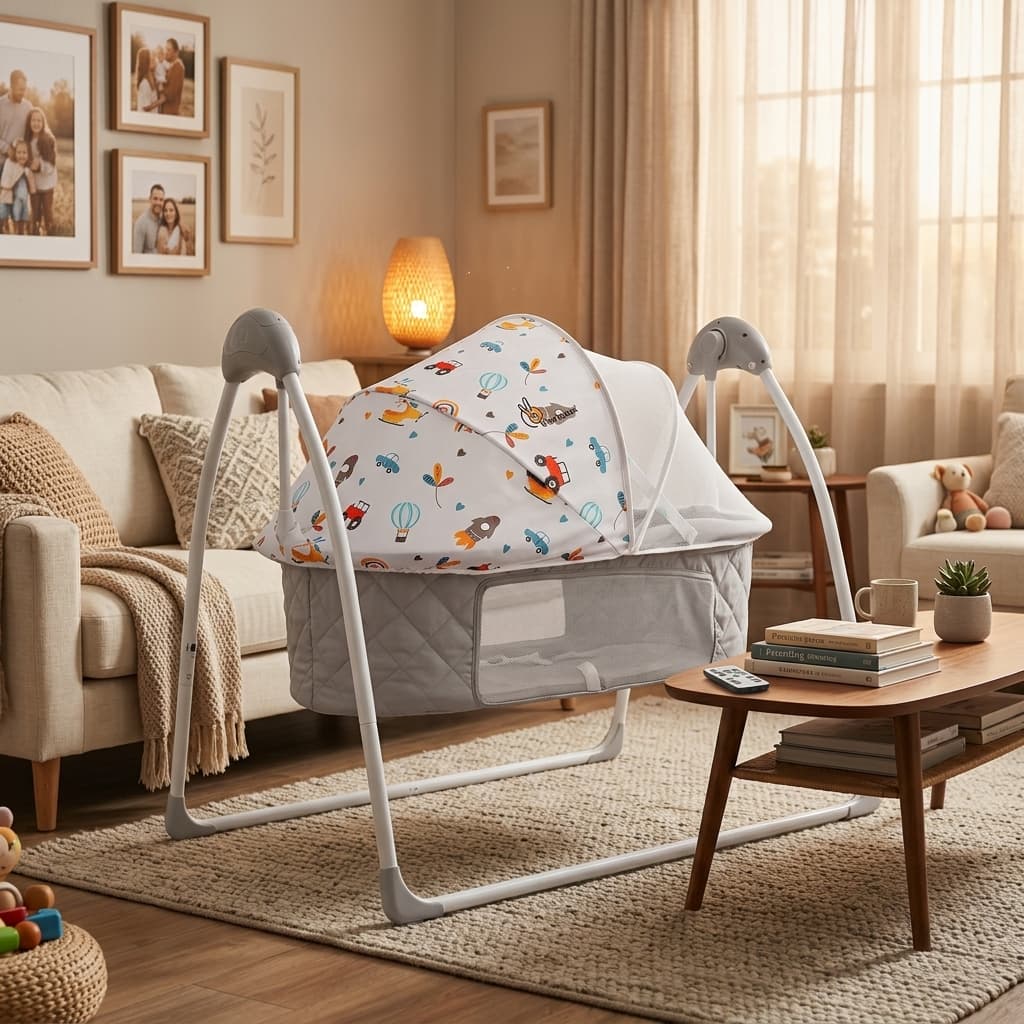
- Electric Baby Swings: Powered by motors with multiple speed settings, remote controls, and Bluetooth. They provide continuous, rhythmic swaying that mimics the womb. Highly effective for colic but bulky and expensive (₹8,000 - ₹12,000).
- Manual Rockers: Bounce naturally in response to the baby's own movements or a gentle push from a parent. They are lightweight, portable, and require no power outlet. Retails for ₹4,000 - ₹7,000.
The Rejection Risk and Short Lifespan
Two factors make buying an automatic baby swing a financial risk. First, around 30% of babies simply reject electric movement—they will cry when placed in it, leaving you with an expensive, non-returnable product. Second, swings have a very short lifespan. Once a baby reaches 8-9 months or 11 kg (or starts trying to sit up), the swing becomes unsafe to use. The active utility window is often just 3 to 4 months.
Need gear for your next trip or daily commute?
Book deep-cleaned strollers, car seats and high chairs. Delivery and pickup are shown before confirmation.
AAP Safety Rules: Supervision is Key
The American Academy of Pediatrics (AAP) safety guidelines state that baby swings and rockers are only meant for supervised waking time, not for overnight sleep. Because of the semi-reclined angle, a sleeping infant's head can tilt forward, blocking their airway. If your baby falls asleep in a swing, move them to a flat, firm crib mattress immediately. Swings should be limited to 30 minutes of continuous use per session.
Why Renting is the Smart Parent’s Loophole
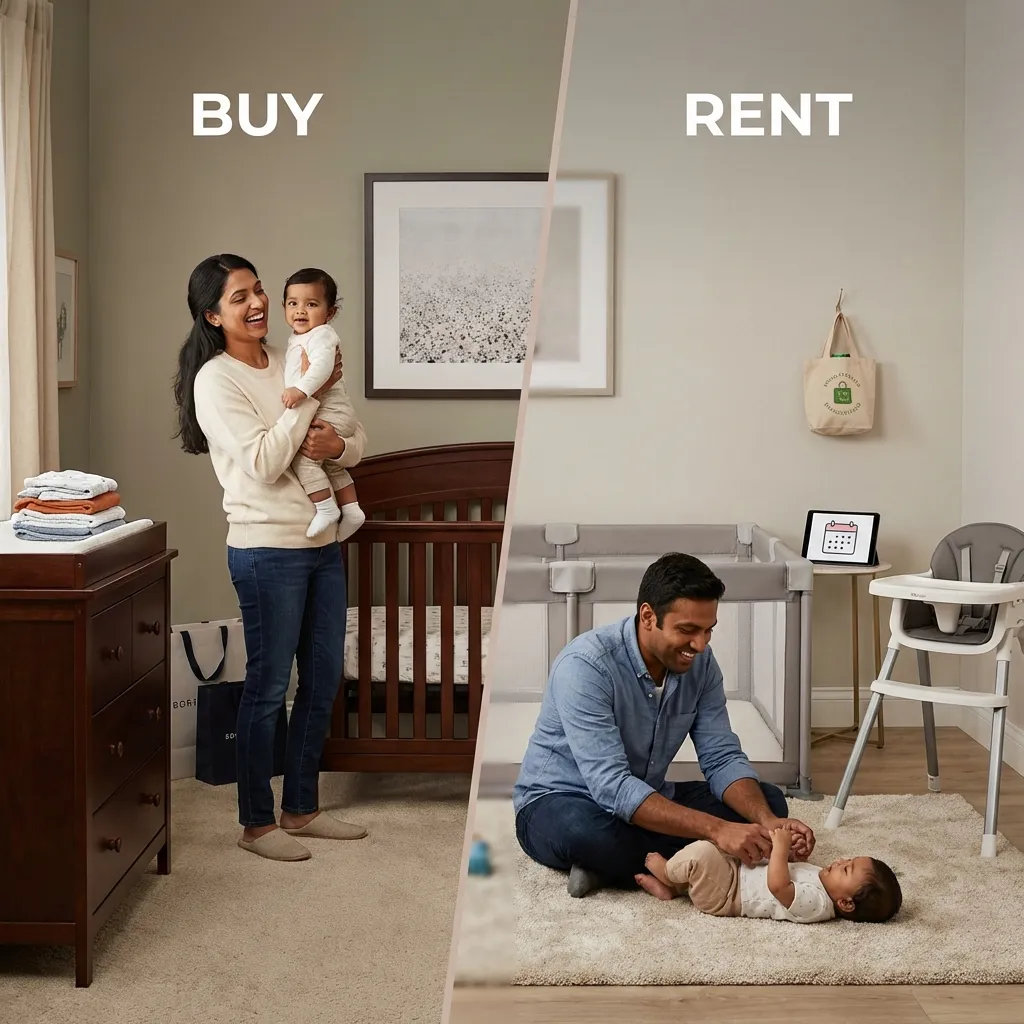
Instead of spending ₹11,000 on a product your baby might hate, you can rent an electric automatic swing from HomieHyra for a trial period. We offer weekly plans for ₹899 and monthly plans for ₹1,499. If your baby loves it, keep renting it for the colic phase. If they reject it, return it with zero hassle. Once the phase is over and your baby outgrows it, we pick it up—no storage clutter, no lowball offers on resale sites.
Frequently Asked Questions
Q.Do baby swings actually help soothe colicky babies?
Yes. The rhythmic, side-to-side swaying motion of an electric swing mimics the sensory environment of the womb, which helps calm fussiness and colic. However, about 30% of babies do not take to electric motion, making a rental trial highly recommended.
Q.Can a baby sleep overnight in an electric swing?
No. The American Academy of Pediatrics (AAP) advises against letting infants sleep in swings, rockers, or car seats. If your baby falls asleep in a swing, they should be moved to a flat, firm crib mattress immediately.
Q.How much does it cost to rent an automatic baby swing in Delhi NCR?
Through HomieHyra, you can rent a sanitized, premium automatic baby swing starting at ₹1,499/month, or opt for a 1-week trial plan for ₹899.
Before you close this tab: quick action checklist