What you will learn
Why the Traditional Indian Jhula Has a Safety Expiry Date
For generations, the wooden or fabric jhula (cradle) has been a staple in Indian households. It is lightweight, soothing, and easily moved. However, many parents do not realize that cradles have a strict safety limit. Once your baby hits certain developmental milestones, keeping them in a traditional cradle becomes a major fall hazard.
Critical Milestones: When to Transition from Cradle to Crib
You should move your baby out of a cradle and into a deep crib or cot if they reach any of the following:
- The 5-Month Mark: Even if they aren't rolling yet, babies develop sudden motor control that can surprise you.
- Rolling Over: If your baby can roll from back to tummy or side to side, they can easily spill out of a shallow cradle.
- Pushing Up: Pushing up on hands and knees raises their center of gravity, making the cradle walls too low to protect them.
- Weight Limits: Most cradles are only rated up to 9-11 kg.
Cradle vs. Cot vs. Travel Playpen: Safety and Cost Breakdowns
To help you decide on the safest sleeping option for your baby, here is a factual comparison of sleep systems, safety levels, and costs in India:
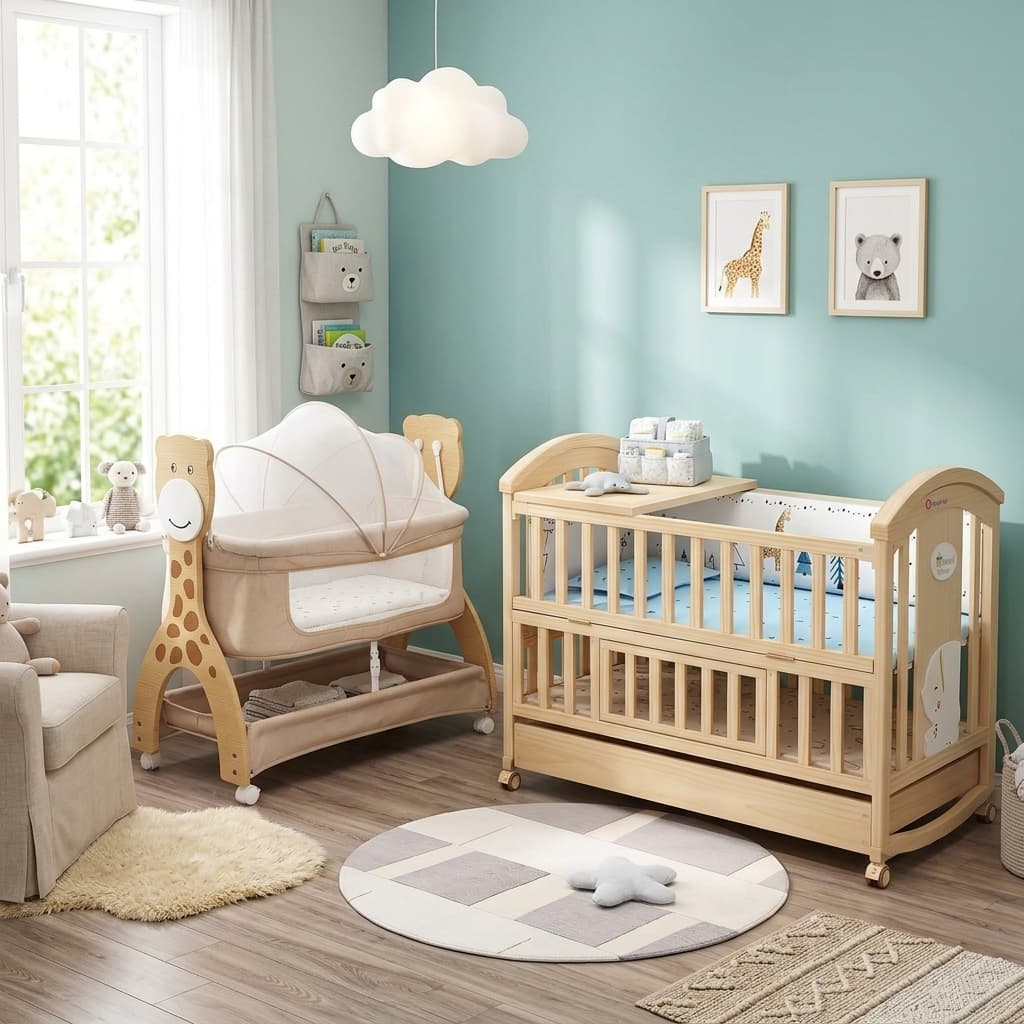
- Wooden Cradle / Jhula: Best for 0-6 months. Safety risk is high after 5 months due to shallow depth. Retails for ₹6,000 - ₹9,000.
- Travel Crib / Playpen: Best for 0-2 years. High safety with deep mesh walls. Retails for ₹7,000 - ₹12,000 (Renting is ₹1,499/month).
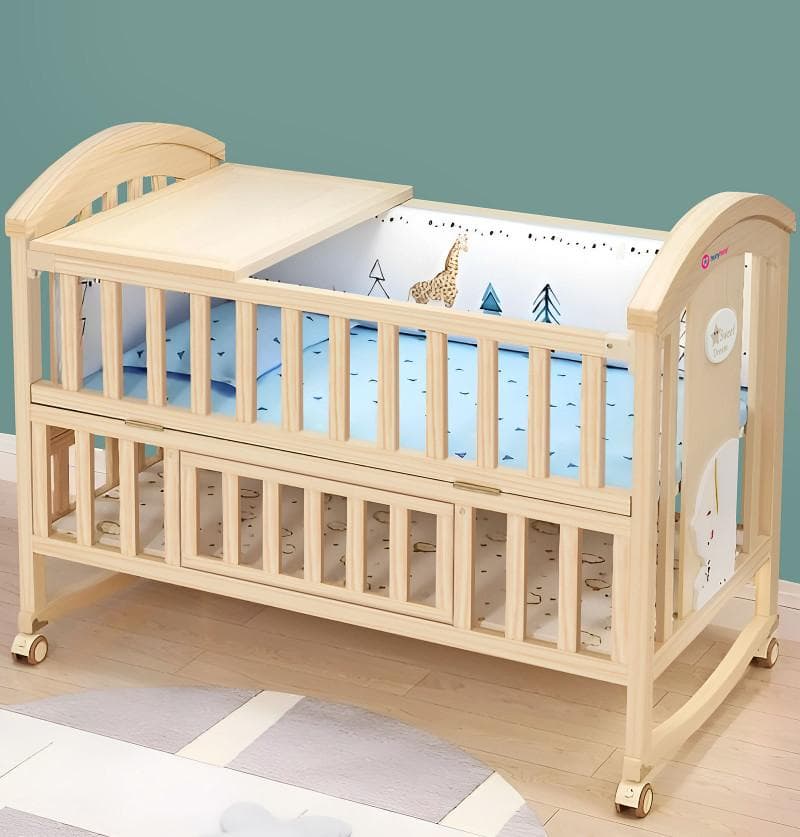
- Wooden Cot: Best for 0-4 years. Exceptional safety with adjustable mattress heights. Retails for ₹12,000 - ₹20,000 (Renting is ₹1,799/month).
Need gear for your next trip or daily commute?
Book deep-cleaned strollers, car seats and high chairs. Delivery and pickup are shown before confirmation.
The AAP Sleep Guidelines: Firm and Flat
According to the American Academy of Pediatrics (AAP), infants must sleep on a flat, firm mattress free of loose blankets, pillows, or bumpers to prevent Sudden Infant Death Syndrome (SIDS). Traditional fabric jhulas can curve the baby's back and tilt their head forward, which can block their sensitive airways. Transitioning to a flat crib is crucial for their breathing safety.
Why Renting a Baby Cot is Smarter Than Buying
Buying a full-size wooden cot in Delhi NCR means spending ₹15,000 upfront and dedicating 15 square feet of your bedroom to a piece of furniture that you will need to disassemble and store in a couple of years. By renting a cot or travel playpen through HomieHyra, you get a clean, sanitized, and certified sleep space delivered to your door. You use it for the exact months you need, and we take it back when your child is ready for a normal toddler bed.
Frequently Asked Questions
Q.When should a baby transition from a cradle to a crib?
A baby should transition from a cradle or jhula to a crib as soon as they can roll over, push up on their hands and knees, or reach 5 months of age. Traditional cradles have shallow walls, posing a serious fall risk once the baby becomes mobile.
Q.Is co-sleeping on an adult bed safer than a baby crib?
Pediatric safety guidelines recommend room-sharing but not bed-sharing. Co-sleeping on a standard adult mattress increases the risk of accidental suffocation. A separate firm, flat baby cot or playpen placed adjacent to the parents' bed is the safest sleeping setup.
Q.Can I rent a baby cot in Noida and Gurgaon?
Yes, HomieHyra offers sanitized wooden cots and foldable travel cribs for rent with doorstep delivery and setup across Delhi, Gurugram, Noida, and Greater Noida.
Before you close this tab: quick action checklist