What you will learn
Every October and November, Delhi NCR experiences an environmental phenomenon known as the 'post-Diwali pollution inversion.' A confluence of stubble burning, festive firecrackers, low wind speeds, and falling temperatures traps ultra-fine particulate matter (PM2.5 and PM10) close to the ground, pushing the Air Quality Index (AQI) into the 'Severe' (400-500+) and 'Hazardous' categories across Delhi, Gurugram, Noida, and Ghaziabad.
While healthy adults experience eye irritation and throat dryness, infants and toddlers face grave physiological risks. Their lungs are still developing, and their breathing anatomy makes them extraordinarily vulnerable to toxic smog. This definitive guide covers pediatric respiratory protection, how to establish a true indoor clean-air nursery, and how to maintain developmental movement indoors when outdoor parks are completely out of bounds.
The Pediatric Vulnerability Equation: Why Babies Inhale 3x More Toxins
Pediatric pulmonologists highlight four biological reasons why air pollution is exponentially more harmful to young children:
- Rapid Respiratory Rate: A resting adult takes 12 to 16 breaths per minute. A newborn takes 40 to 60 breaths per minute, and a 1-year-old takes 25 to 35 breaths. Babies inhale far more air per pound of body weight.
- Incomplete Alveolar Development: At birth, infants have only about 20 million lung alveoli (air sacs). Over the first 3 years of life, this number multiplies to over 300 million. Exposure to heavy PM2.5 during this critical growth window can stunt long-term lung volume and induce early asthma.
- Narrower Airway Caliber: An infant's bronchial tubes are narrow. A tiny layer of smog-induced mucosal swelling can reduce airway cross-sectional area by up to 50%, leading to rapid stridor, wheezing, and bronchiolitis.
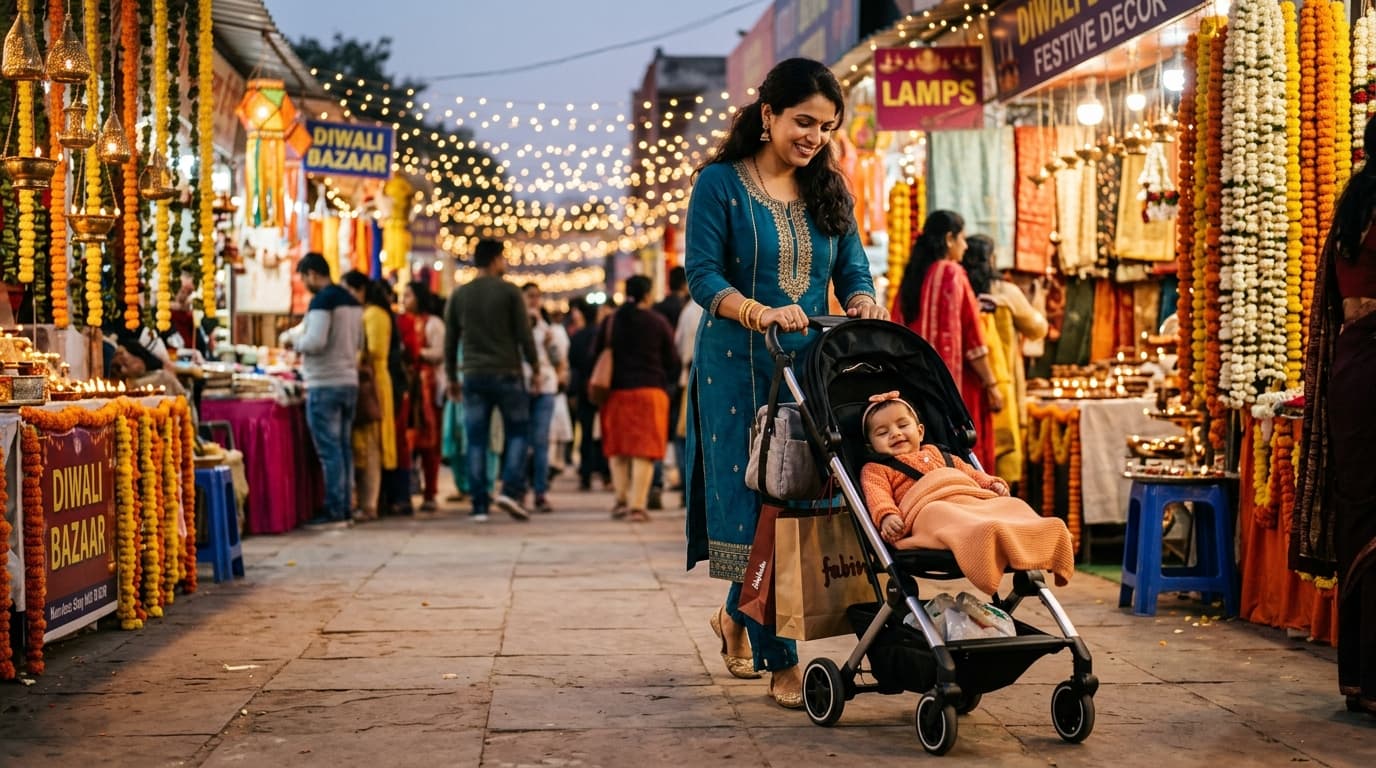
- The Stroller & Ground-Level Trap: Strollers sit roughly 0.5 to 0.8 meters above street level. Particulate matter settles heavily near the road surface due to cold air inversion, meaning babies in prams breathe the densest smog layer.
The 3-Step Nursery 'Clean Air Zone' Protocol
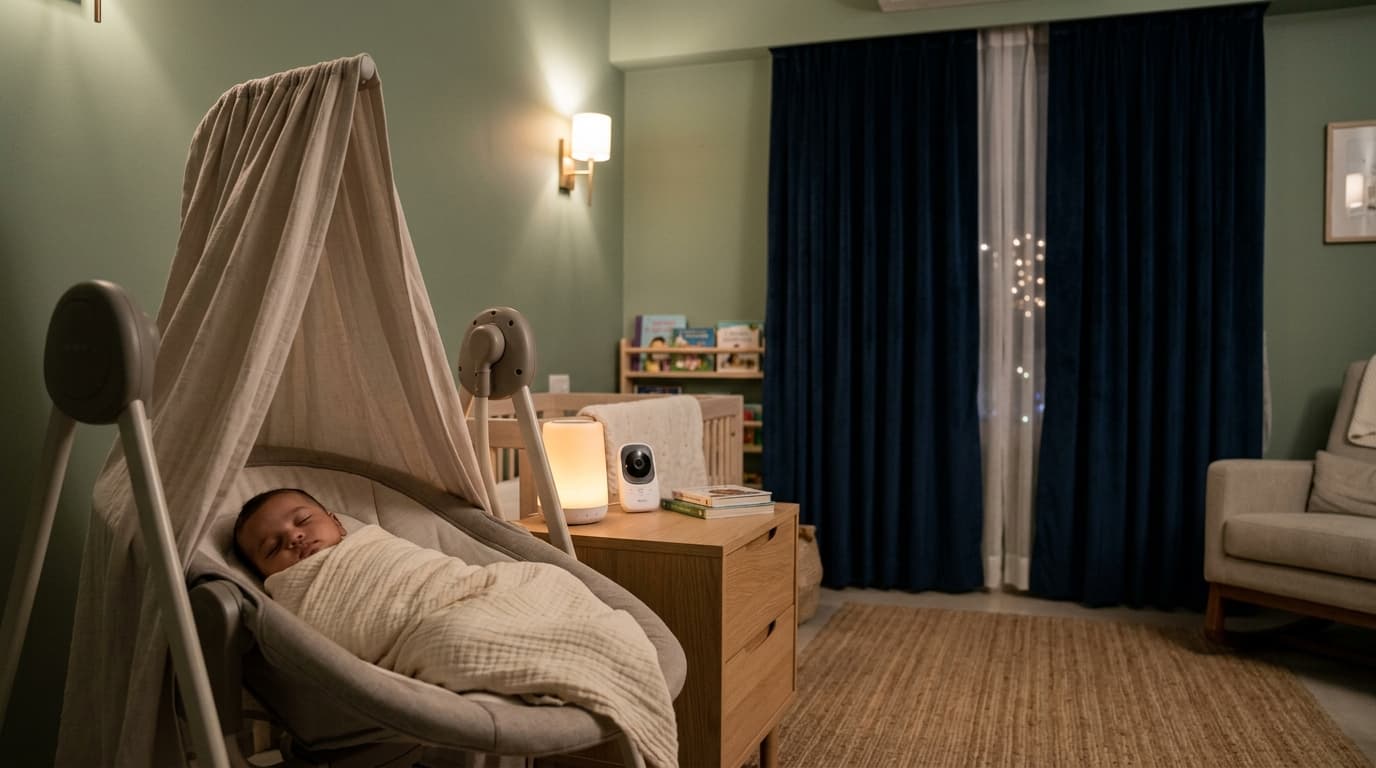
To safeguard infant respiratory health, your home must serve as a biological sanctuary. Focus your filtration efforts on the room where the baby sleeps and plays:
1. True HEPA Filtration Setup
Use an air purifier equipped with a certified True H13 HEPA filter capable of capturing particles down to 0.1 microns. Position the purifier at least 3 feet away from walls and 4 to 5 feet from the baby's cot—never blowing air directly onto the infant's face. Keep it running 24/7 on automatic mode to maintain an indoor AQI below 35.
2. Banishing Indoor Combustion Hazards
Many parents diligently close windows but inadvertently generate hazardous indoor pollution during festive celebrations:
- No Agarbatti or Dhoop: Burning incense sticks generates volatile organic compounds (VOCs) and benzene levels equivalent to smoking several cigarettes in an enclosed space.
- Avoid Traditional Paraffin Candles & Mustard Oil Diyas Indoors: Burning oils release fine soot. Keep oil diyas on open outdoor balconies and use safe LED battery diyas for interior decoration.
- Use Kitchen Exhausts Continuously: Festive deep-frying of puris and snacks generates intense indoor particulate matter. Keep kitchen doors closed and exhaust fans running on high.
Need gear for your next trip or daily commute?
Book deep-cleaned strollers, car seats and high chairs. Delivery and pickup are shown before confirmation.
3. Door Sweeps & Window Sealing
Delhi smog easily seeps under apartment main doors and balcony sliding glass tracks. Install rubber door sweeps and apply silicone sealing tape along drafty balcony doors to prevent smoke penetration.
Beating 'Cabin Fever': Creating an Indoor Sensory Play Sanctuary
When AQI reaches 400+, pediatricians advise strictly avoiding parks, gardens, and outdoor strolls for 2 to 3 consecutive weeks. However, keeping an energetic 10-month-old to 2-year-old confined indoors often leads to restless irritability, crying spells, and poor sleep.
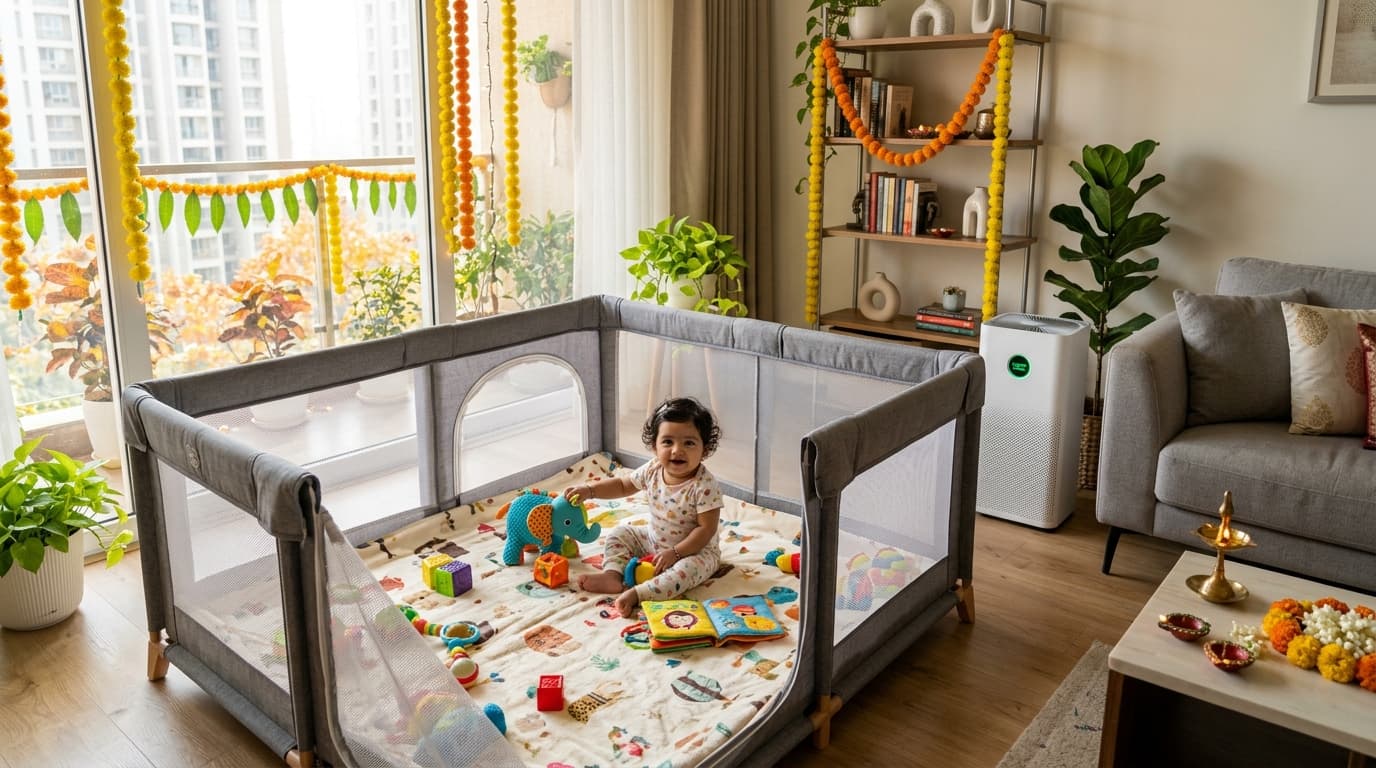
Rather than letting your baby become sedentary or purchasing bulky plastic climbing frames that will permanently clutter your apartment, setting up a rented developmental play zone provides endless gross motor stimulation:
- Spacious Safe Crawl Area: Renting a Large Playpen (150x180 cm) creates a clean, dust-free enclosure where your baby can practice standing, cruising, and rolling safely.
- Sensory Toys & Texture Exploration: Fill the playpen with non-toxic sensory mats, soft fabric books, stacking cups, and musical activity centers to channel physical energy.
- Restful Gliding Retreat: When indoor play leads to overtiredness, a rented Electric Baby Rocker or Automatic Baby Swing offers soothing white noise and rhythmic motion in clean indoor air.
Outdoor Stroller Rules: When (and How) Can You Step Out?
If you must step out for essential pediatric visits or travel during high smog weeks:
- Avoid Morning Inversion Hours (6:00 AM - 10:00 AM): Cold air traps smog closest to the ground in early mornings. If you must travel, plan trips between 1:00 PM and 3:30 PM when sunlight and wind disperse surface particulates.
- Stroller Canopy & Weather Shields: Use strollers with full-coverage extendable canopies like our Flight Cabin Stroller (15 kg Capacity). Use transparent weather shields only with adequate side ventilation to avoid CO2 buildup.
- Wipe Down Immediately: Upon returning home, wipe your baby's face, hands, and hair with a warm damp organic washcloth to remove toxic soot particles before they rub their eyes or put fingers in their mouth.
Frequently Asked Questions About Baby Care During Delhi Pollution
Q.Can babies wear N95 pollution masks in Delhi NCR?
No. Pediatricians advise that children under 2 years of age should never wear N95 or tight-fitting cloth masks. Their airways are too small, and masks increase breathing resistance, posing severe suffocation and carbon dioxide retention risks. Strict indoor air filtration is the only medically recommended protection.
Q.My baby developed a dry cough after Diwali night. When should I see a doctor?
Consult your pediatrician immediately if you observe fast breathing (more than 50 breaths per minute), chest retractions (skin sucking in under ribs), blueish discoloration around the lips, refusal to nurse, or persistent wheezing.
Q.Can I use saline nasal drops to clean my baby's nose during smog season?
Yes, pediatricians frequently recommend sterile isotonic saline nasal sprays or drops (2-3 drops per nostril) followed by a gentle silicone nasal aspirator to clear trapped soot particles and moisturize dry nasal passages.
Q.How long does HomieHyra playpen rental take to deliver in Gurgaon or Noida?
HomieHyra provides same-day or next-day delivery across Delhi, Gurgaon, Noida, and Faridabad. All playpens arrive thoroughly sanitized and ready for instant assembly.
Before you close this tab: quick action checklist