What you will learn
You are expecting your first baby or just brought one home, and suddenly everyone has an opinion. Your mother says get a jhula. Your neighbour swears by a wooden cot. Amazon is pushing automatic cradles with Bluetooth speakers. And that parenting Facebook group insists only a full-size crib is safe. The truth is, each option has a specific purpose, and choosing the wrong one means wasted money, wasted space, and sometimes compromised safety. Let us cut through the noise.
What Is the Difference Between a Crib, Cradle, and Cot?
These three terms get used interchangeably in India, but they are distinctly different products with different use cases. Understanding the actual difference is the first step to making the right choice for your baby and your home.
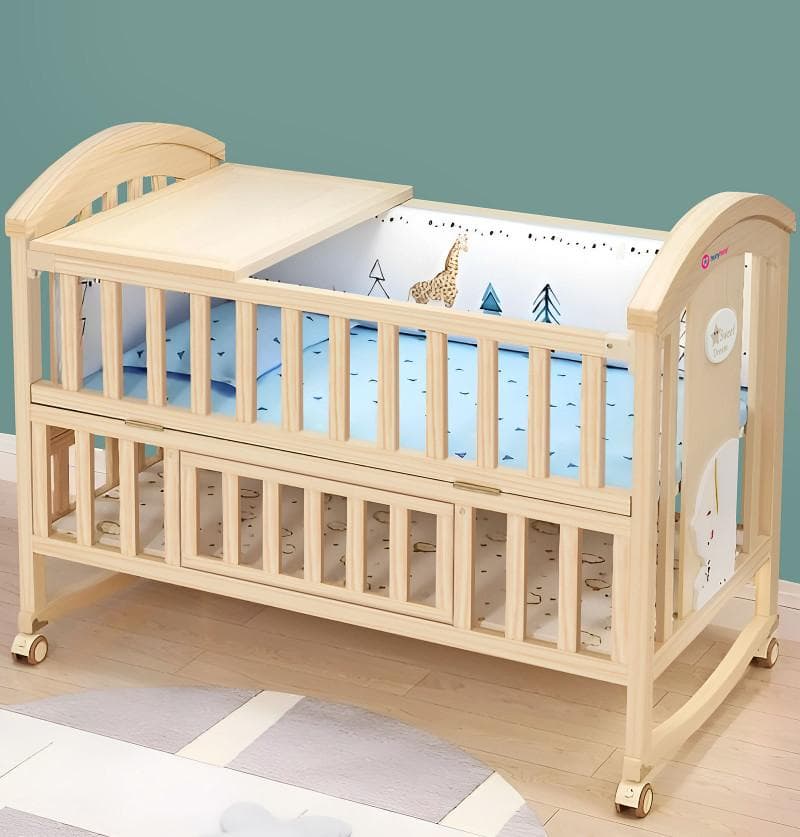
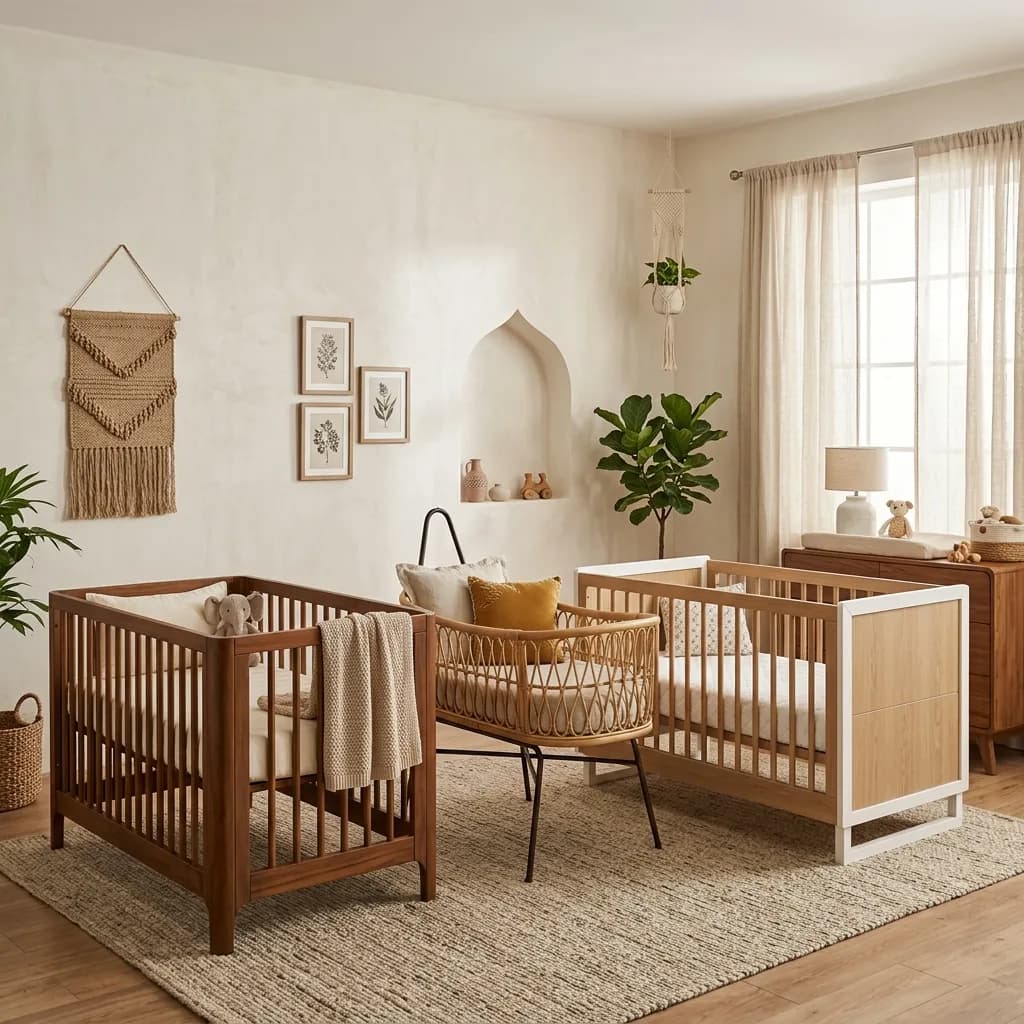
- Baby Crib: A full-size sleeping enclosure with four fixed sides and a firm mattress. Standard cribs measure approximately 120cm x 60cm. They have adjustable mattress heights and slatted sides for airflow. Designed for babies from birth to 2-3 years. This is what paediatricians worldwide recommend as the safest sleep option.
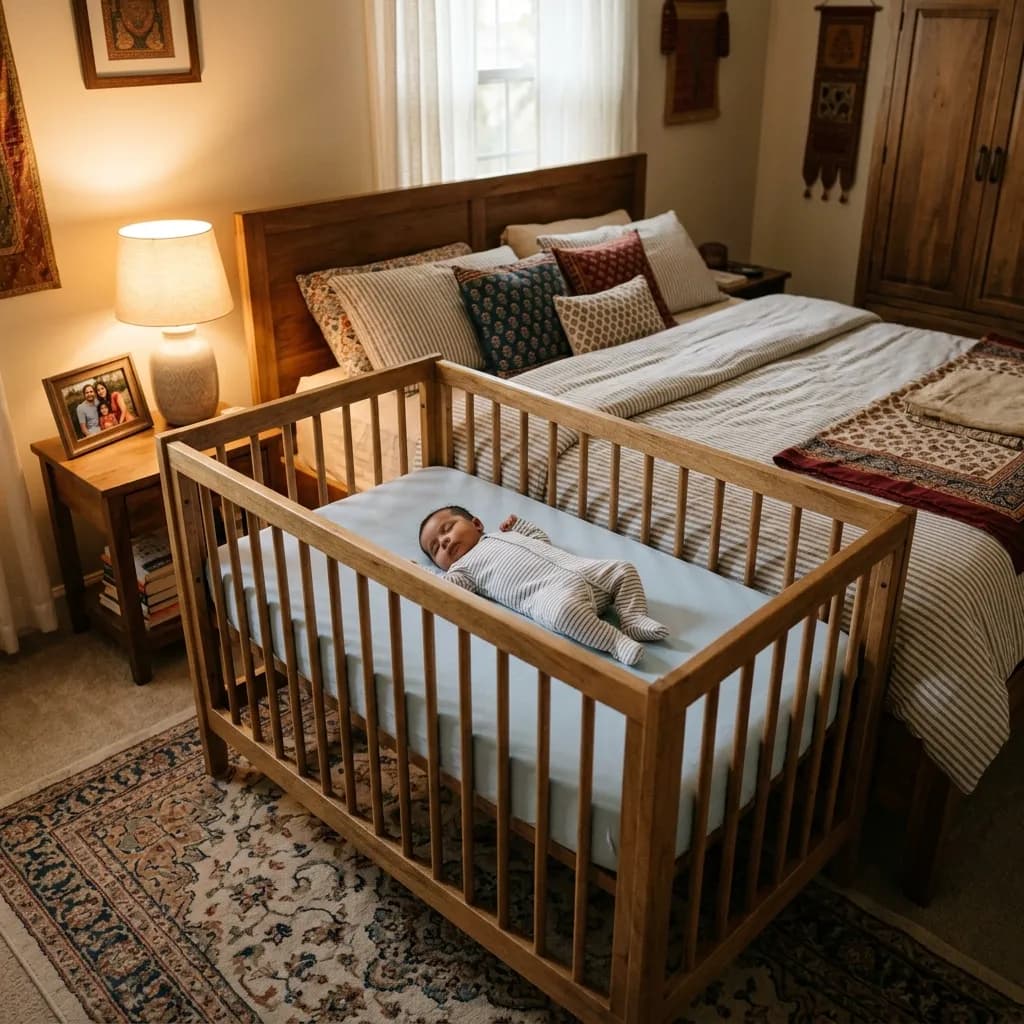
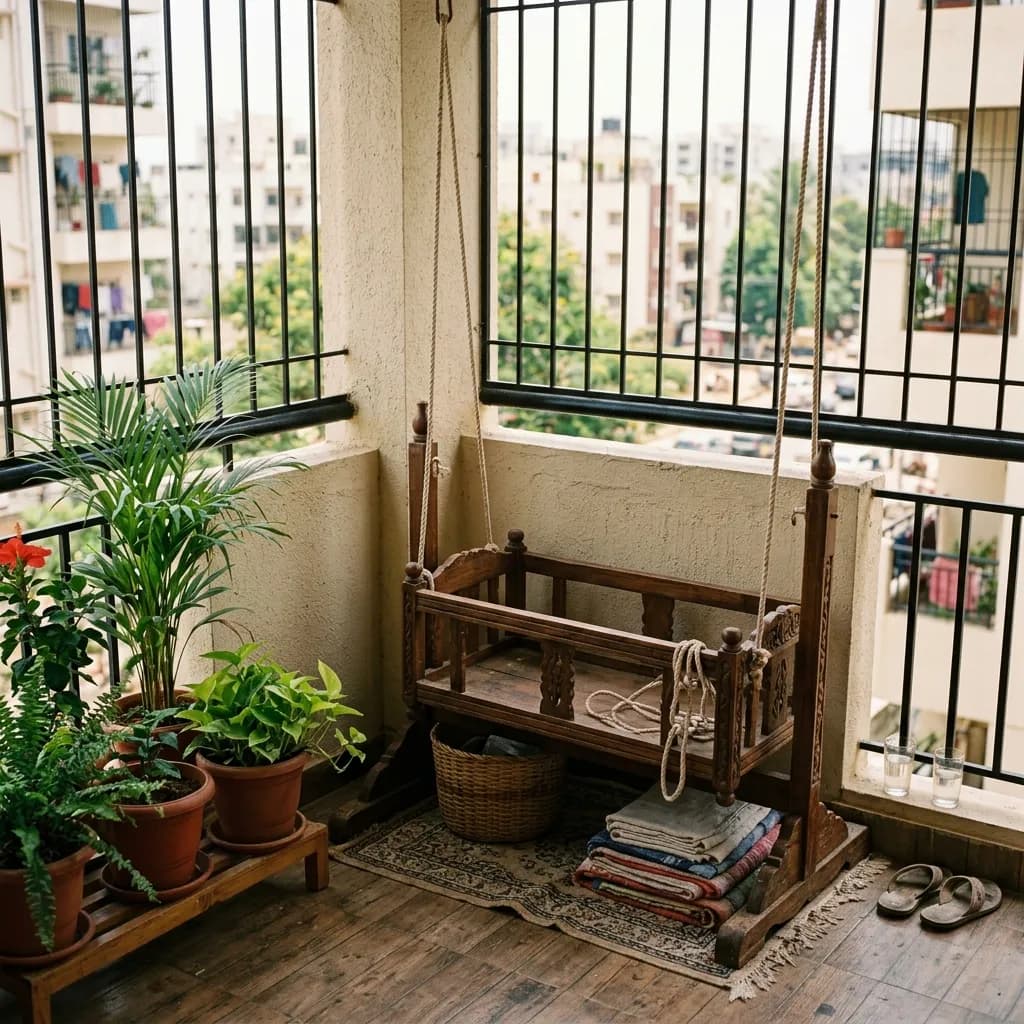
- Baby Cradle: A smaller, portable sleeping basket that rocks or swings. Traditional Indian jhulas, automatic electric cradles, and bedside bassinets all fall in this category. Typically usable from birth to 5-6 months or until baby reaches 7-8 kg. Compact footprint but short lifespan.
- Baby Cot: In India, this usually refers to a wooden bed with side rails, often larger than a crib and sometimes convertible into a toddler bed. Some Indian cots are just traditional wooden beds with mosquito net frames. They vary wildly in size, safety standards, and quality.
Age Suitability: Which One Works When?
This is where most parents make expensive mistakes. They buy for the newborn stage and forget that babies grow fast.
- Newborn to 4 months: A cradle works perfectly. Newborns prefer the cosy, enclosed feeling. The gentle rocking helps with sleep. But this window is short, usually 3-5 months before baby starts rolling and needs a flat, firm surface.
- 4 months to 12 months: A crib becomes essential. Baby is rolling, possibly pulling up to stand by 8-9 months. The crib's firm mattress and fixed sides provide safety that a cradle cannot. This is the critical transition most parents delay too long.
- 12 months to 3 years: A crib with lowered mattress or a cot with side rails. Toddlers climb, kick, and move constantly in sleep. You need sturdy sides and a mattress low enough that they cannot climb out.
- The overlap problem: If you buy a cradle for the newborn phase, you still need a crib by month 5. If you buy only a crib, it works from day one but newborns sometimes resist the large open space. The ideal setup is cradle for first 4-5 months, then transition to crib.
Space Requirements: The Indian Apartment Reality
Let us talk about the elephant in the room, literally. Indian apartments are not designed for nursery furniture. A 2BHK in Noida or Gurgaon has bedrooms measuring 10x12 feet. After your queen bed, wardrobe, and side tables, you have maybe 4x5 feet of usable floor space. Here is how each option fits.
- Cradle: Takes about 3x2 feet of floor space. Fits beside your bed easily. Some models fold flat for storage. Best for small apartments and joint family setups where the baby sleeps in the parents' room.
- Crib: Takes 4.5x2.5 feet of floor space. That is a significant chunk of a small bedroom. Some cribs have wheels for moving between rooms, but doorways in Indian apartments are narrow at 2.5 feet and the crib barely fits through.
- Cot: Varies wildly from 3x2 feet to 5x3 feet. Indian wooden cots tend to be custom-made and can be sized to your room, but larger models are impossible to move once assembled.
For families in metro cities with space constraints, starting with a cradle and switching to a compact crib at 5 months is the most practical approach. And this is exactly where renting saves you. Rent a cradle for 4 months, return it, rent a crib. No storage problem, no two pieces of furniture fighting for floor space.
Safety Comparison: What Actually Matters
Safety is non-negotiable. Here is the honest safety comparison based on paediatric guidelines and real incidents reported by Indian parents.
- Crib safety: The safest option when standards are met. Look for slat spacing under 6cm (two adult fingers should not fit between slats). Mattress should fit snugly with no gaps. No soft bedding, pillows, or bumpers inside. Drop-side cribs are banned in many countries and should be avoided.
- Cradle safety: Rocking cradles have a tipping risk if not properly weighted or secured. Automatic electric cradles must have auto-stop mechanisms. Weight limits are strict and often ignored by parents who keep using them past 6 months. The hammock-style jhula is the least safe option as it curves the baby's spine and restricts breathing if the baby rolls.
- Cot safety: Unregulated in India. Many local carpenter-made cots have wide slat gaps, sharp edges, and lead paint. If buying a cot, ensure it meets BIS standards or equivalent international certifications.
- The biggest safety mistake Indian parents make: Using thick cotton mattresses and multiple blankets. A firm, breathable mattress with a single fitted sheet is all your baby needs. Thick rajais and gadda sets are suffocation risks, regardless of which sleeping furniture you use.
Need gear for your next trip or daily commute?
Book deep-cleaned strollers, car seats and high chairs. Delivery and pickup are shown before confirmation.
Which Is Best for Newborns?
For the first 4-5 months specifically, a cradle or bassinet beside your bed is the best choice. The American Academy of Pediatrics recommends room-sharing without bed-sharing for the first 6 months. A bedside cradle achieves this perfectly. The baby is within arm's reach for night feeds, you can hear and see them, and they have their own safe sleep space.
After 5 months, transition to a full-size crib. If your budget allows only one purchase, buy the crib and use it from day one. Place rolled towels along the sides under the fitted sheet to create a snugger feeling for the newborn. Remove them once the baby starts rolling.
Cost Comparison: Buy vs Rent
Here is the real math that changes the equation for most Indian families.
- Buying a cradle: Rs 3,000-8,000 for manual, Rs 7,000-15,000 for automatic. Used for 4-5 months. Resale value: Rs 1,500-4,000 if you are lucky. Net cost: Rs 3,000-11,000 for 4 months of use.
- Buying a crib: Rs 10,000-25,000 for a decent wooden crib. Used for 12-24 months. Resale value: Rs 3,000-7,000. Net cost: Rs 7,000-18,000.
- Buying both: Rs 15,000-35,000 total investment. Combined net cost after resale: Rs 10,000-25,000.
- Renting with HomieHyra: Cradle for 4 months at Rs 1,499/month equals Rs 5,996. Crib for 12 months at Rs 1,599/month equals Rs 19,188. Total for 16 months of covered sleep solutions: Rs 25,184. But you can rent just what you need, when you need it, with zero storage, zero resale hassle, and guaranteed safety-checked gear.
- The break-even point: For usage under 8 months, renting almost always wins. For 12 or more months of continuous use, buying a single crib might edge ahead on pure cost, but you still deal with storage and resale.
The Renting Advantage Nobody Mentions
Beyond cost savings, renting solves three problems that buying cannot. First, you can try before you commit. Some babies hate cribs but sleep beautifully in cradles, and vice versa. Renting lets you discover your baby's preference without a Rs 15,000 gamble. Second, you get professionally sanitized gear every time. HomieHyra cribs and cradles are deep-cleaned, inspected for structural integrity, and sealed before delivery. Third, when you are done, it just goes away. No OLX listing, no storage room sacrifice, no guilt about a dusty crib sitting in your balcony.
Quick Decision Guide
- Living in a small apartment with a newborn? Start with a rented cradle for 4 months, then switch to a rented crib.
- Have a dedicated nursery room? Buy or rent a full-size crib from day one.
- Planning a second child within 2 years? Buying a quality crib makes sense for long-term use.
- First-time parent unsure what works? Rent. Try a cradle for 2 months. If your baby prefers it, extend. If not, swap for a crib. Zero risk.
- Grandparents visiting and need temporary baby furniture? Rent a crib for their stay. Return when done.
Frequently Asked Questions
Q.What is the difference between a baby crib and a baby cot in India?
In India, a crib is a standard-sized baby bed with fixed slatted sides and an adjustable mattress, typically measuring 120x60cm. A cot usually refers to a wooden baby bed that may be larger, sometimes convertible to a toddler bed, and often custom-made. Cribs follow international safety standards more consistently than local cots.
Q.Is a cradle safe for newborn babies?
Yes, a cradle is safe for newborns up to 5-6 months or until they reach the weight limit, usually 7-8 kg. Ensure the cradle has a firm, flat mattress, no loose bedding, and a stable base that prevents tipping. Avoid hammock-style jhulas as they curve the spine and can restrict breathing.
Q.Until what age can a baby sleep in a cradle?
Most babies outgrow cradles by 4-6 months. Once your baby starts rolling over, pulling up, or exceeds the weight limit of the cradle, it is time to transition to a full-size crib for safety reasons.
Q.Can I use a crib from birth?
Yes. A full-size crib with the mattress on the highest setting is safe from birth. Some newborns may take a few days to adjust to the larger space. Using a swaddle can help them feel more secure in a crib during the first few weeks.
Q.Is it better to rent or buy a baby crib in India?
For usage under 8 months, renting is almost always more economical. You avoid the upfront cost of Rs 10,000-25,000, get sanitized and safety-checked gear, and skip the resale hassle. HomieHyra offers crib rentals starting at Rs 1,599 per month with doorstep delivery in Delhi NCR.
Q.What is the safest sleeping arrangement for a baby in India?
The safest setup is a firm, flat mattress in a crib or cot placed in the parents' room for the first 6 months. Use only a fitted sheet, no pillows, thick blankets, or bumpers. Keep the crib away from windows, curtains, and electrical cords. Use a mosquito net frame rather than draping fabric directly over the crib.
Before you close this tab: quick action checklist