What you will learn
Here is a number that should make every expecting parent pause: the average baby cradle in India gets active use for just 3.5 months. Not 12 months. Not even 6. Three and a half months of daily use, then it sits in your storage room collecting dust until you sell it at a 60% loss on OLX. We have processed thousands of baby gear returns at HomieHyra, and cradles consistently have the shortest rental periods of any product we offer. This is not a flaw in the product. It is a reality of how babies grow. And understanding it before you buy saves you real money.
Reason 1: Babies Outgrow Cradles Shockingly Fast
Most baby cradles have a weight limit of 7-9 kg. The average Indian baby hits 7 kg between 4 and 5 months. But weight is not the only factor. Once your baby starts rolling, which typically happens between 3 and 5 months, the cradle becomes unsafe. A rolling baby in a shallow cradle is a fall risk. A rolling baby in a hammock-style jhula can end up face-down with restricted breathing. Paediatricians recommend moving to a flat, firm surface the moment your baby shows signs of rolling, even if they have not hit the weight limit yet.
Parents who buy cradles expecting 8-10 months of use are consistently surprised. Your baby's development timeline does not care about your purchase receipt.
Reason 2: The Automatic Swing Dependency Trap
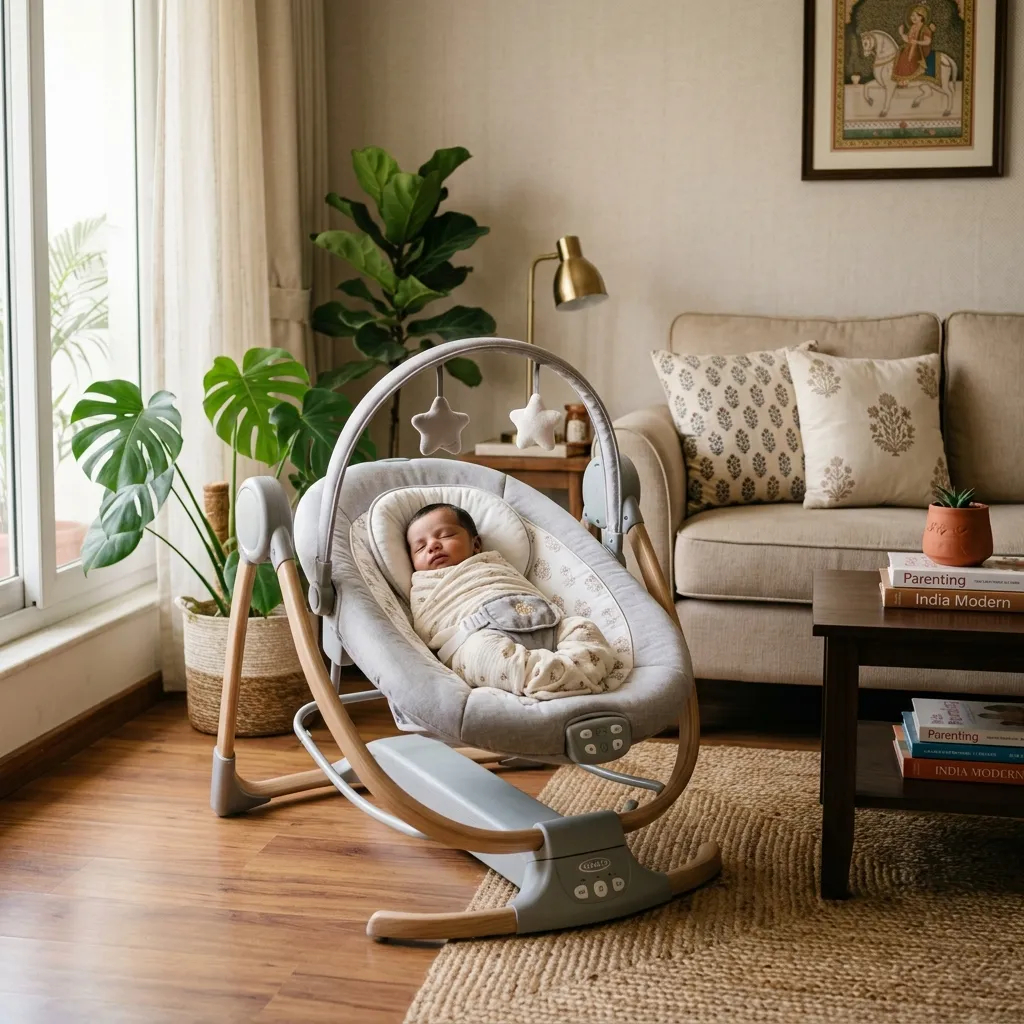
Automatic electric cradles are the most popular baby purchase on Amazon India right now. They promise hands-free soothing and uninterrupted sleep. And they deliver on that promise, at first. The problem emerges around month 3-4 when you need to transition your baby to a crib. A baby who has spent every nap and night sleep being rocked by a motor now cannot fall asleep on a still surface. Parents describe weeks of sleep regression, crying, and midnight battles trying to make the switch.
We hear this from parents constantly. The automatic cradle becomes a crutch. The longer you use it, the harder the transition. Sleep consultants in India now routinely advise limiting automatic cradle use to the first 8-10 weeks, then gradually reducing the swing speed to help the baby learn to sleep without motion. If you use it for 5 months straight, you are setting yourself up for a painful week of sleep training.
Reason 3: Storage Becomes a Nightmare
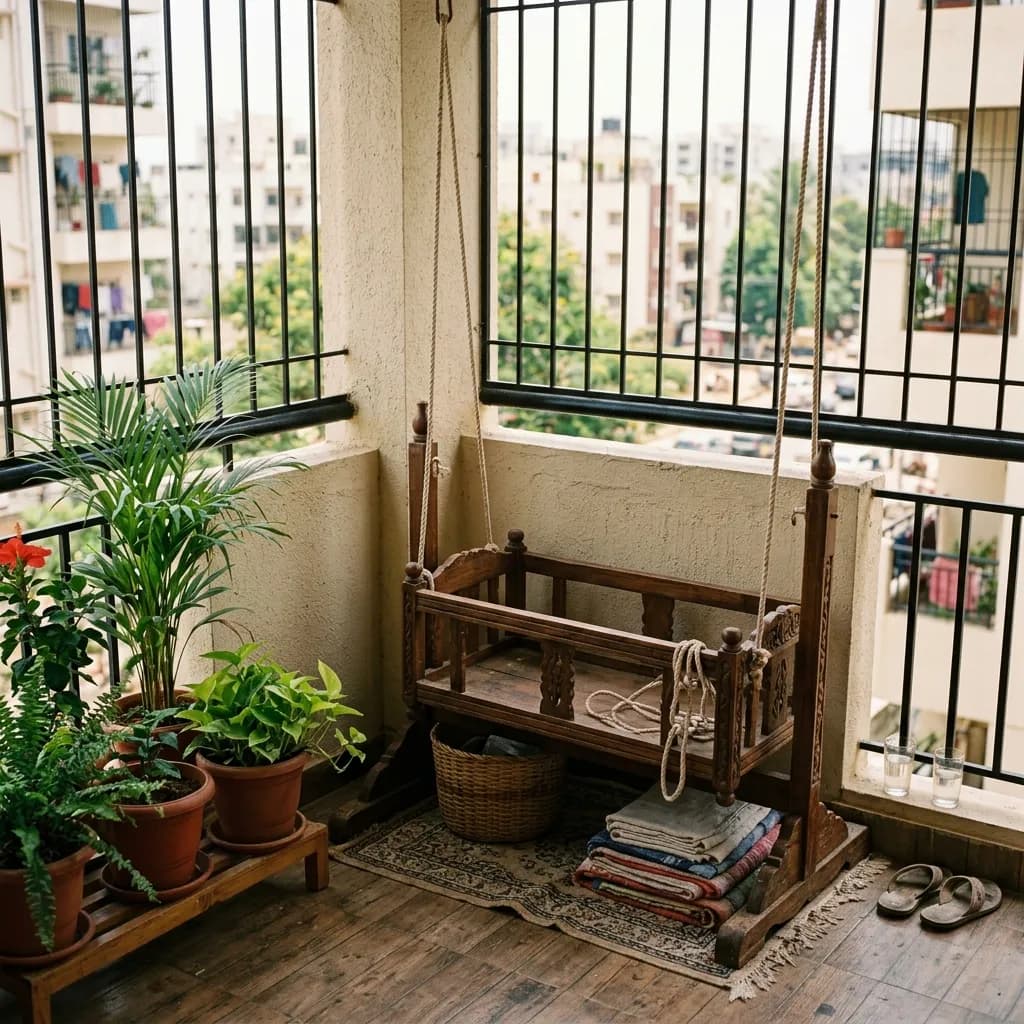
A cradle is not a small item. Even folding models take up 3x2 feet when collapsed. Non-folding wooden cradles are bulky, heavy, and impossible to disassemble without tools. In a 2BHK apartment in Delhi NCR, that is premium real estate. Parents end up stuffing it into the balcony, under the bed, or on top of the wardrobe. One parent told us she kept her automatic cradle in the living room for 8 months after her baby outgrew it because she could not find anyone to buy it and had nowhere to store it.
Reason 4: Resale Is Harder Than You Think
The baby product resale market in India is brutal. There are more sellers than buyers, and buyers know it. That Rs 11,000 automatic cradle you bought new? On OLX or Facebook Marketplace, used automatic cradles with motors sell for Rs 3,000-4,500 at best. Manual wooden cradles fare even worse at Rs 1,000-2,000. And the process is painful: listing, responding to messages, dealing with people who ghost after saying they will come, and the awkwardness of strangers in your home inspecting your baby's things.
The depreciation math is ugly. Buy for Rs 11,000, use for 4 months, sell for Rs 4,000. That is Rs 7,000 for 120 days of use, which works out to Rs 58 per day. Renting the same automatic cradle from HomieHyra costs Rs 1,499 per month or approximately Rs 50 per day. Renting is literally cheaper per day than the depreciation cost of owning.
Need gear for your next trip or daily commute?
Book deep-cleaned strollers, car seats and high chairs. Delivery and pickup are shown before confirmation.
Reason 5: The Temporary-Use Psychology
There is a psychological cost nobody talks about. When you spend Rs 10,000 or more on a cradle, your brain wants to justify that expense. So you keep using it longer than you should. You tell yourself the baby is fine in it even when they are clearly too big. You ignore the paediatrician's advice to transition to a crib because the money you spent. This is the sunk cost fallacy applied to baby gear, and it can genuinely compromise your baby's safety.
Renting eliminates this psychology entirely. When the rental period ends or your baby outgrows the cradle, you return it with zero emotional baggage. No justification needed. No guilt. You make the transition decision based purely on your baby's needs, not your wallet's regrets.
Why Renting a Baby Cradle Makes More Sense
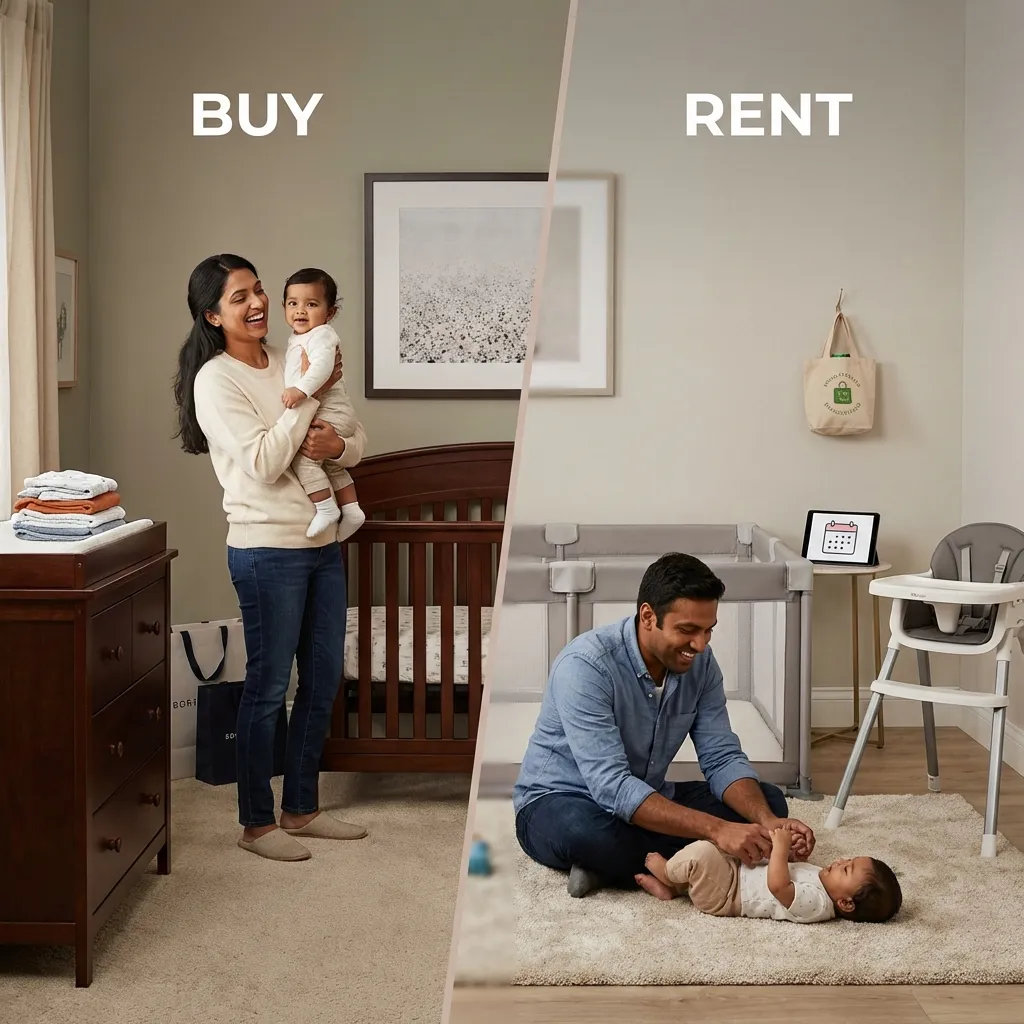
When you know a product will be used for 3-5 months maximum, renting is not just cheaper. It is the rational choice. Here is what renting a cradle through HomieHyra looks like.
- Month 1-4: Rent an automatic cradle for Rs 1,499/month. Total: Rs 5,996.
- Month 5: Baby starts rolling. Return the cradle. Rent a crib instead.
- No storage problem: The cradle leaves your home the day your baby outgrows it.
- No resale hassle: Zero time spent on OLX listings and buyer negotiations.
- No sunk cost guilt: You transition to a crib exactly when your baby needs it.
- Total cradle cost via renting: Rs 5,996. Total cradle cost via buying and reselling: Rs 7,000-9,000 net loss.
What Smart Parents Do Instead
The pattern we see from experienced parents, those on their second or third child, is remarkably consistent. They never buy cradles. They rent a cradle for the newborn phase, return it at 4 months, and rent or buy a quality crib for the longer haul. First-time parents buy everything. Second-time parents rent the short-use items and only buy what they will use for over a year. You do not need to learn this lesson the expensive way.
Frequently Asked Questions
Q.How long do babies actually use a cradle?
Most babies actively use a cradle for 3-5 months. The usable period ends when the baby starts rolling over, typically at 3-5 months, or when they reach the cradle's weight limit of 7-9 kg. After that, a flat, firm crib surface is safer.
Q.Is an automatic baby cradle worth buying?
An automatic cradle provides excellent soothing for the first 2-3 months but creates sleep dependency. Given the short usage window of 3-5 months and the Rs 7,000-15,000 purchase price, renting at Rs 1,499/month is significantly more economical and avoids the storage and resale problems.
Q.When should I switch from cradle to crib?
Switch when your baby shows any of these signs: rolling over, exceeding the cradle weight limit, appearing cramped, or reaching 5 months of age. Most paediatricians recommend transitioning by 4-5 months for safety reasons.
Q.Can I sell a used baby cradle easily in India?
Used cradles typically sell for 30-40% of the original price on platforms like OLX. Automatic cradles retain slightly more value but the process takes 2-4 weeks of listing, negotiating, and dealing with buyers. Most parents find the resale experience frustrating.
Before you close this tab: quick action checklist