What you will learn
The automatic baby swing is one of the most searched baby products in India right now. Every parenting influencer has one. Amazon reviews are glowing. Your sister-in-law swears it saved her sanity. But behind the marketing and the Instagram reels, there is a more nuanced reality. Some parents call it the greatest invention ever made. Others call it the most expensive dust collector in their house. The difference comes down to timing, usage patterns, and whether you buy or rent. Let us break it all down.
What Does an Automatic Baby Swing Actually Do?
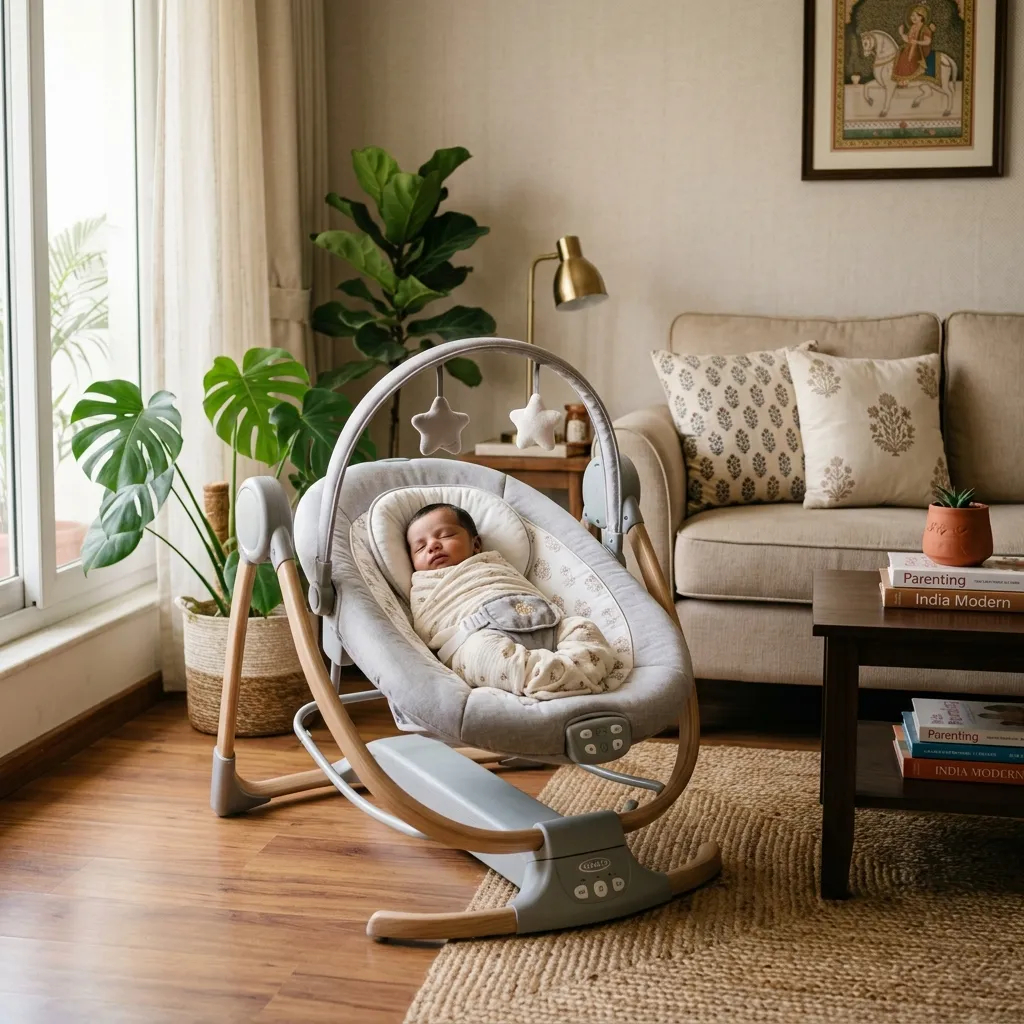
An automatic baby swing uses a battery or electric motor to provide consistent, rhythmic swinging motion that mimics the sensation of being rocked in a parent's arms. Modern models come with multiple speed settings, built-in music, vibration modes, and recline positions. The primary purpose is soothing a fussy baby and helping them fall asleep without constant holding. Some models also function as bouncers, cradles, or feeding seats.
In India, the most popular automatic swings are from brands like R for Rabbit, LuvLap, Babyhug, and Infantino. Prices range from Rs 7,000 for basic battery-operated models to Rs 15,000 for feature-rich electric ones with Bluetooth music and app control.
The Real Benefits: What It Does Well
- Soothing a colicky baby: If your baby has colic, which peaks between weeks 2 and 6, an automatic swing can be a genuine lifesaver. The consistent motion calms the nervous system in a way that manual rocking often cannot match because parents get tired and inconsistent.
- Hands-free time for parents: New parents, especially mothers recovering from delivery, need moments to eat, shower, or just sit without holding a baby. A swing gives you 20-30 minutes of safe, supervised time where your baby is content.
- Sleep support for reflux babies: Many paediatricians recommend slightly inclined positions for babies with acid reflux. Swings with adjustable recline can provide this position while the gentle motion helps the baby drift off.
- Consistent routine: Unlike manual rocking where the rhythm varies with your exhaustion level, a swing provides the exact same motion every time. Some sleep-sensitive babies respond better to this consistency.
The Honest Downsides Nobody Tells You
- Sleep dependency: This is the biggest concern. Babies who are swung to sleep for every nap and bedtime can develop a strong motion dependency. When you transition them to a still crib at 4-5 months, you face days or weeks of difficult sleep regression. Sleep consultants recommend using the swing for soothing, not as the primary sleep surface.
- Short usage window: The typical automatic swing is useful from birth to about 5-6 months. After that, babies are too heavy, too active, and too curious to stay in one safely. That is a maximum of 6 months of use for a Rs 10,000 or more purchase.
- Not a safe sleep surface: Despite what some parents believe, paediatricians advise against letting babies sleep for extended periods in a swing. The reclined position can cause the head to fall forward, restricting the airway. Swings are for supervised soothing, not overnight sleep.
- Electricity and battery costs: Electric models need a power outlet, limiting where you can place them. Battery-operated models burn through batteries fast, costing Rs 200-400 per month in battery replacements if used daily.
Safety Precautions for Automatic Swings in India
Safety with automatic swings is non-negotiable. Follow these guidelines from paediatric safety experts.
- Always use the harness. Every swing comes with a 3-point or 5-point harness. Use it every single time, even if your baby seems secure. Babies can slide down and get trapped in the leg area.
- Never leave a sleeping baby in the swing unattended. If your baby falls asleep, transfer them to a flat crib within 20-30 minutes.
- Check weight limits strictly. Most swings are rated for 9-11 kg. Exceeding this stresses the motor and frame, creating a tipping hazard.
- Place on a flat, hard floor. Never place a swing on a bed, sofa, or table. The vibration and motion can cause it to walk to the edge and fall.
- Inspect the frame monthly. In India's humid climate, especially during monsoon, metal joints can develop rust that weakens the structure. Check all connection points and the motor mount regularly.
The Real Cost of Owning an Automatic Swing
Need gear for your next trip or daily commute?
Book deep-cleaned strollers, car seats and high chairs. Delivery and pickup are shown before confirmation.
Let us do the math that the product listing page will never show you.
- Purchase price: Rs 7,000-15,000 depending on brand and features.
- Battery cost (if battery-operated): Rs 200-400/month for 4-5 months equals Rs 800-2,000.
- Accessories: Mosquito net attachment Rs 300-500, extra seat cover Rs 500-800.
- Resale value after 5 months of use: Rs 2,500-5,000 on OLX (30-40% of purchase price).
- Net cost of ownership for 5 months: Rs 5,500-12,000.
- Cost per day of actual use: Rs 37-80 per day.
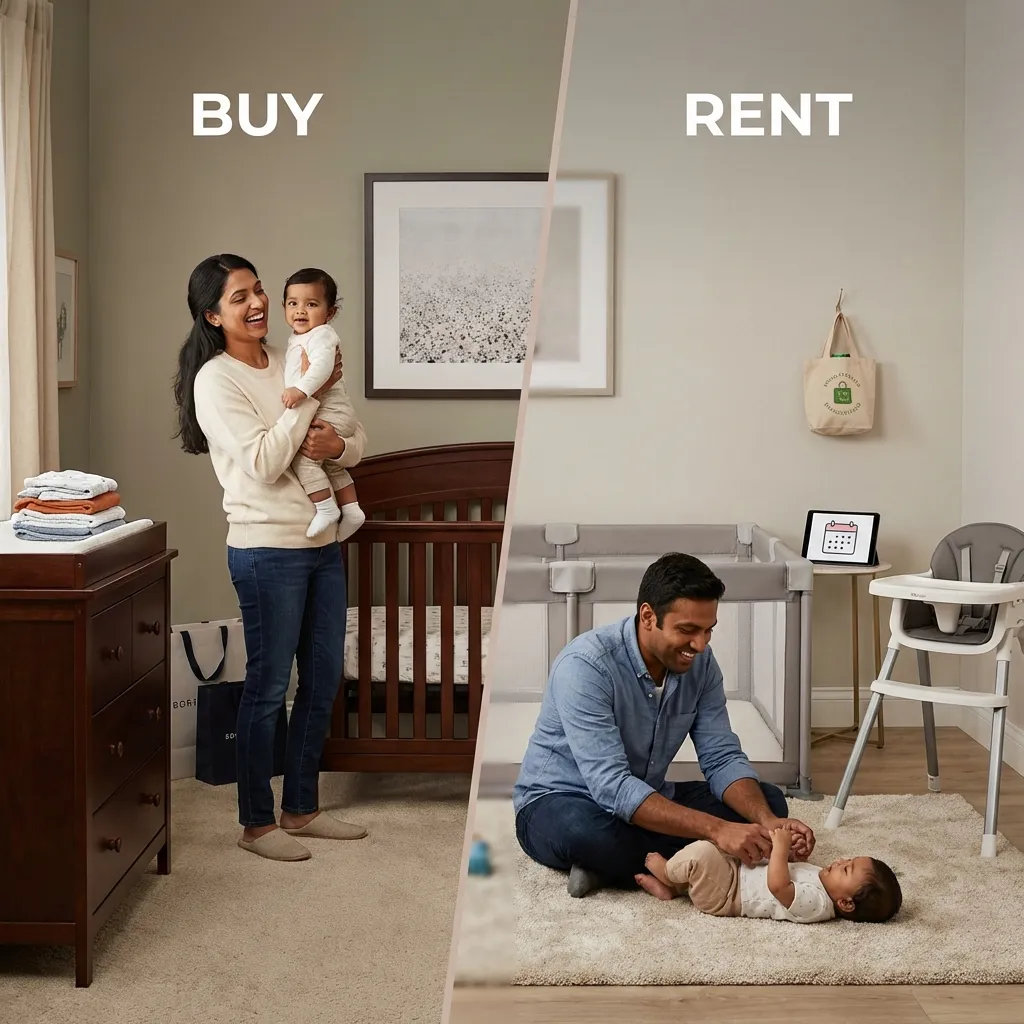
Renting vs Buying: The Clear Winner
When you know a product will be used for 4-6 months maximum, the rent-or-buy calculation becomes straightforward.
- Renting from HomieHyra: Rs 1,499/month for a premium automatic swing. For 4 months of use: Rs 5,996 total.
- Buying and reselling: Rs 10,000 purchase minus Rs 4,000 resale equals Rs 6,000 net loss, plus the hassle of batteries, storage, listing, and selling.
- Renting saves you: The hassle factor, storage space, resale stress, and often Rs 500-5,000 in actual money.
- The try-before-you-commit advantage: Some babies hate swings. If your baby refuses to sit in it after week one, you have wasted Rs 10,000 on a purchase but only Rs 1,499 on a rental. You return it and try something else.
Who Should Definitely Rent Instead of Buy
- First-time parents: You do not know yet if your baby will like a swing. Rent first, discover their preference, then decide.
- Parents in rented apartments: You are already managing limited space. Adding permanent baby gear to a temporary living situation makes no sense.
- Parents expecting to use it for under 5 months: The break-even point for buying vs renting is around 7-8 months of daily use. For anything less, renting wins.
- Parents who value convenience: No assembly headaches, no storage problem, no resale drama. Rent it, use it, return it.
Frequently Asked Questions
Q.Is an automatic baby swing safe for newborns?
Yes, automatic swings are safe for newborns when used correctly. Use the harness every time, keep the swing on a flat floor, use the most reclined position for newborns, and never leave a sleeping baby unattended in the swing. Transfer to a flat crib for extended sleep.
Q.How long can a baby use an automatic swing?
Most automatic swings are suitable from birth to 5-6 months or until the baby reaches the weight limit of 9-11 kg. Once the baby starts sitting up independently or trying to climb out, it is time to stop using the swing.
Q.Do automatic baby swings cause dependency?
They can if used as the primary sleep surface for every nap and bedtime. Sleep consultants recommend using swings for soothing and calming, but transitioning the baby to a flat crib once they are drowsy. Limiting swing sleep to the first 8-10 weeks helps prevent strong motion dependency.
Q.Which is better: battery or electric automatic swing?
Electric swings are more powerful, consistent, and cheaper to run long-term. Battery swings are portable and work during power cuts. For home use in India, electric models are generally better. For travel or homes with frequent power outages, battery models offer more flexibility.
Q.Is it cheaper to rent or buy an automatic baby swing in India?
For usage under 6 months, renting is cheaper. A HomieHyra rental costs Rs 1,499/month. Four months of rental equals Rs 5,996. Buying at Rs 10,000 and reselling at Rs 4,000 costs Rs 6,000 net plus battery costs, storage hassle, and resale time. Renting also lets you try before committing.
Before you close this tab: quick action checklist